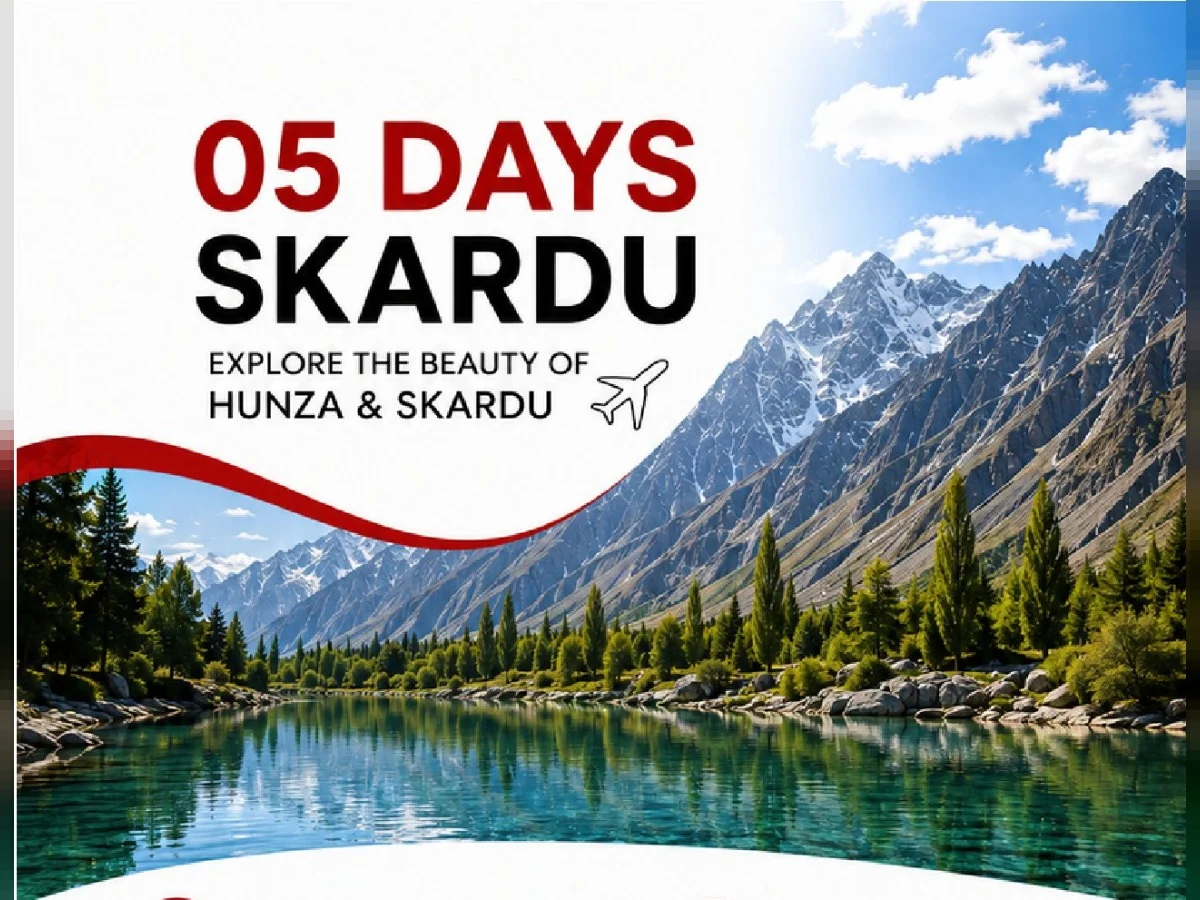
Shangrila & Lower Kachura Lake
The famous red-roofed resort around a still lake, often called 'heaven on earth'.
Mirror lakes, a cold desert and the gateway to the highest mountains
Skardu is the capital of Baltistan, a wide valley where the Indus River runs between sand dunes and snow peaks. It is the starting point for expeditions to K2 and the Baltoro Glacier, but you don't need to be a climber to love it: within an hour or two of town there are mirror-calm lakes, a cold desert, old forts and the huge high plateau of Deosai.
With direct flights from Islamabad, Skardu is one of the quickest places in the north to reach, which makes it a favourite for short trips, families and honeymooners.

The places our travellers love most. Your tour lead will show you the way.
The famous red-roofed resort around a still lake, often called 'heaven on earth'.
A deep, clear lake in an orchard village, with boat rides and trout by the water.
One of the highest plateaus in the world at over 4,000 m, carpeted with wildflowers in summer and home to the Himalayan brown bear.
High-altitude sand dunes just outside Skardu, with jeep rides and quad biking.
A 17th-century palace of the Amacha rulers, restored and now a heritage hotel and museum.
A tall waterfall in Kharmang, with tables set in the cold stream for lunch.
An old hilltop fort above the town, with the best view of the Indus valley.
A quiet side valley of meadows and forest, good for a day away from the crowds.
Baltistan is sometimes called 'Little Tibet'. The Balti language is a form of old Tibetan, and Balti houses, food and music show that heritage, mixed with centuries of Persian and Central Asian influence. Most people are Shia or Noorbakhshi Muslims, and old mosques and khanqahs, such as those at Shigar and Khaplu, are built in a distinctive carved-wood style.
Polo is the region's great sport and is played on village grounds in summer. Try marzan, a sweet porridge served with apricot oil, and the dried apricots and kernels sold in Skardu bazaar.
Baltistan was once a group of small kingdoms, the best known ruled by the Maqpon dynasty from Skardu. Its most famous ruler, Ali Sher Khan Anchan, extended the kingdom around the end of the 16th century and is remembered at Kharpocho Fort. The region later came under Dogra rule from Kashmir and became part of Pakistan after 1948.
Since the early 20th century Skardu has been the base for mountaineers on their way to K2, the world's second-highest mountain.
May to October; Deosai is open roughly from mid-June to September
Fly Islamabad to Skardu in about an hour, one of the most scenic flights in the world (weather permitting). By road it is around 20 hours via the Karakoram Highway and Chilas, usually over two days.
About 2,230 m
Group departures and ready-made trips that include Skardu.
Skardu by road: Shangrila and Upper Kachura lakes, Shigar Fort and the Sarfaranga cold desert, and the forests and meadows of Basho Valley…
Run by the Rumaix team · limited seats
Both great valleys of Gilgit-Baltistan in eight days: Skardu with Shangrila, Upper Kachura, the Cold Desert, Manthoka Waterfall and Deosai…
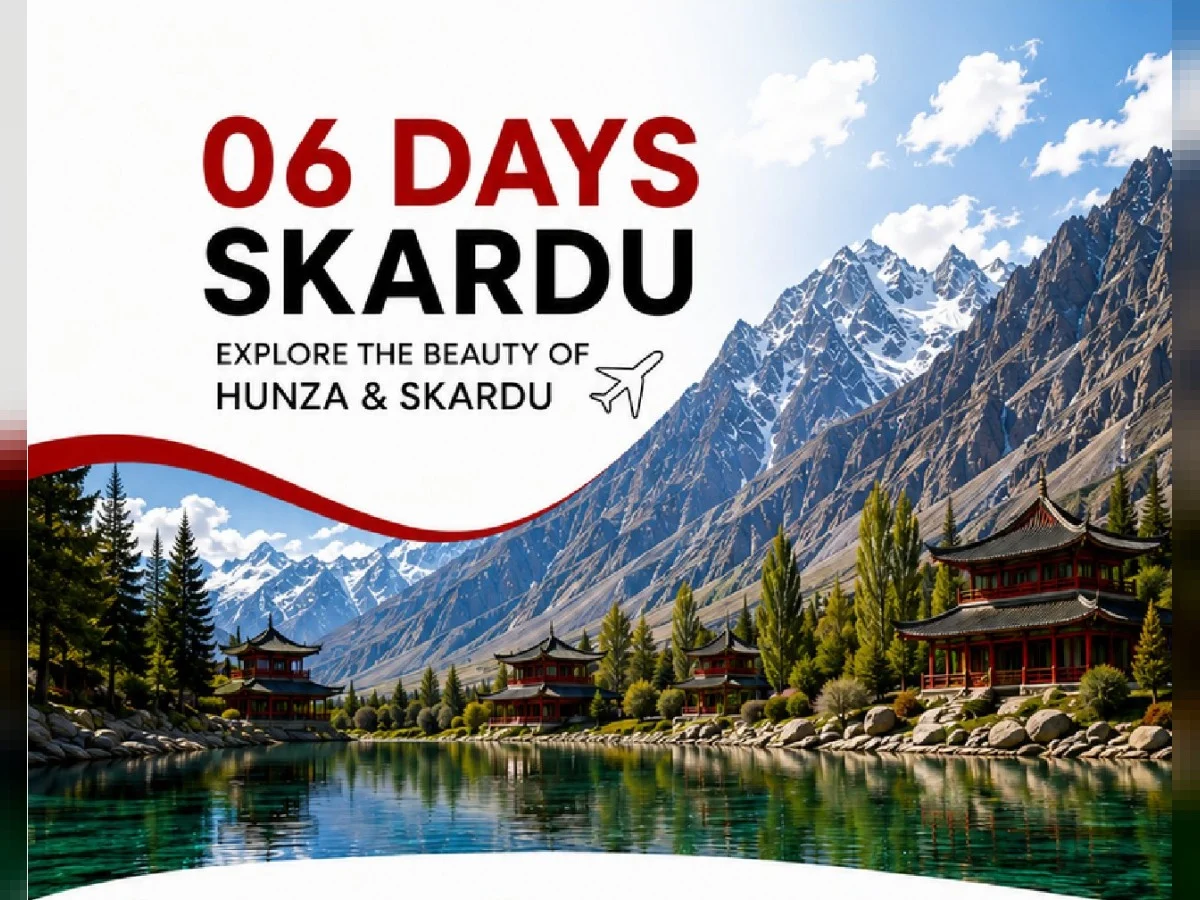
Six days in Skardu: Shangrila and Upper Kachura lakes, Shigar valley, fort and cold desert, Manthoka Waterfall, and a 4x4 jeep day to Basho…
Tell us your dates and who is travelling, and we will plan the trip around you: transport, hotels and a local guide.
 Gilgit-Baltistan
Hunza
Apricot orchards, ancient forts and a ring of 7,000-metre peaks
Read the guide
 Gilgit-Baltistan
Fairy Meadows
A forest meadow at the foot of Nanga Parbat
Read the guide
 Khyber Pakhtunkhwa
Naran & Kaghan
Glacier lakes, rushing rivers and the road over Babusar Top
Read the guide
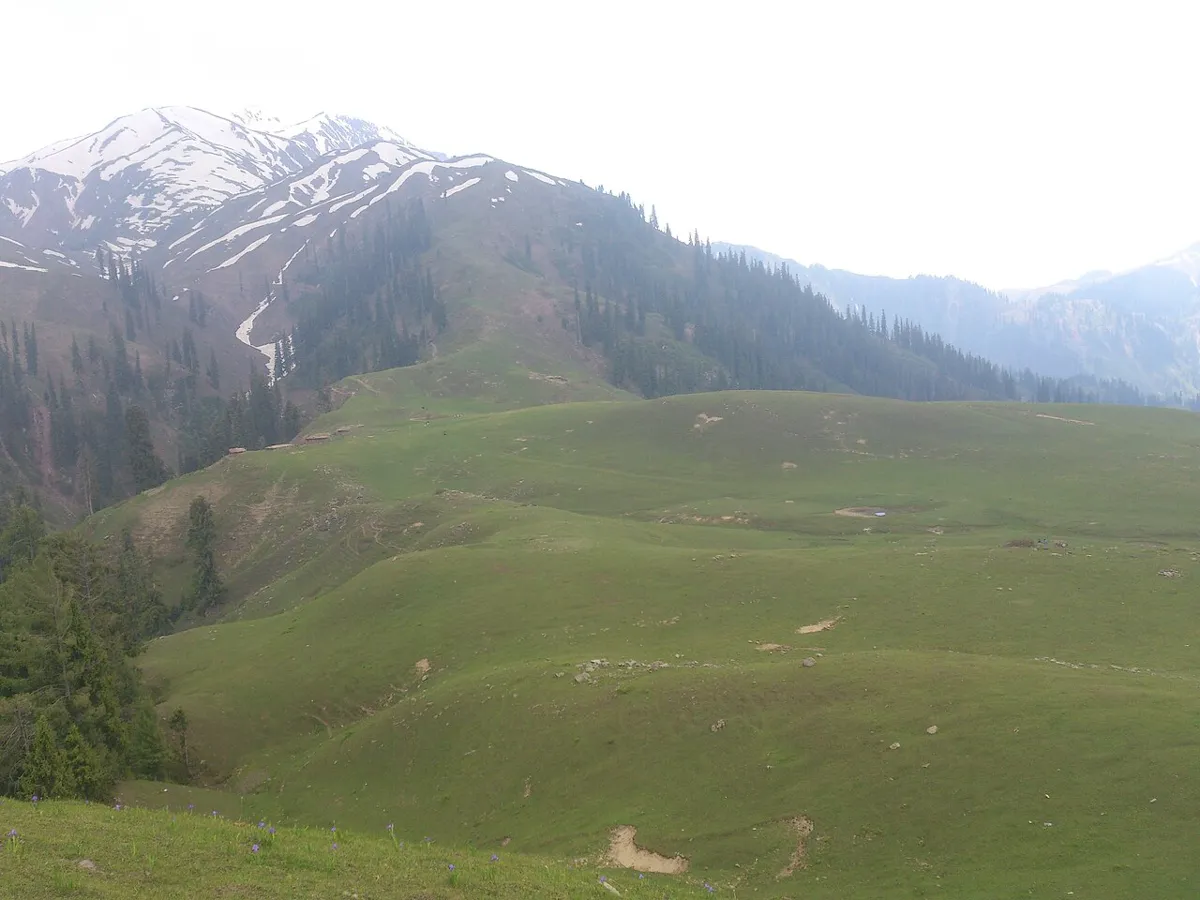 Khyber Pakhtunkhwa (Kaghan Valley)
Shogran
A forest plateau with meadows facing Makra Peak
Read the guide
We have your request. For faster replies and confirmation, send it to us on WhatsApp too. The message is already written for you.
Send on WhatsApp Download your ticketYour request is already saved with us.